Exhibition
Baroque Splendors
From El Greco to Velázquez
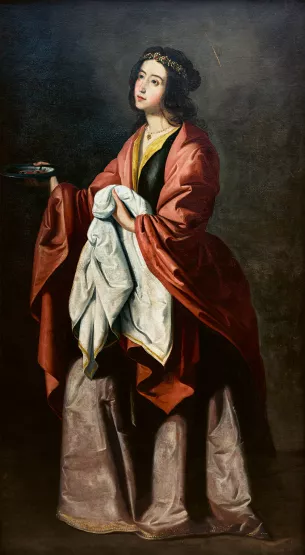
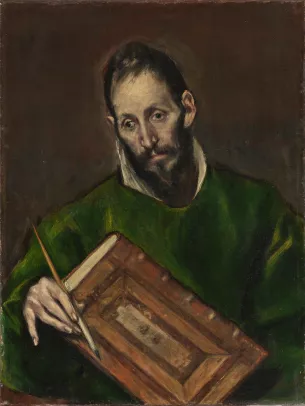
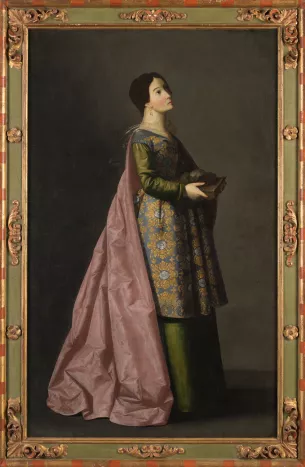
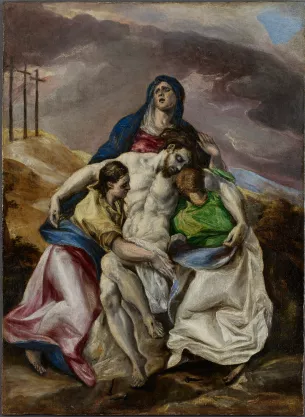
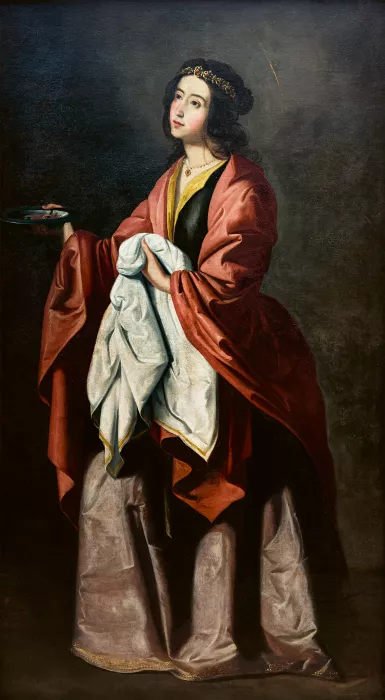
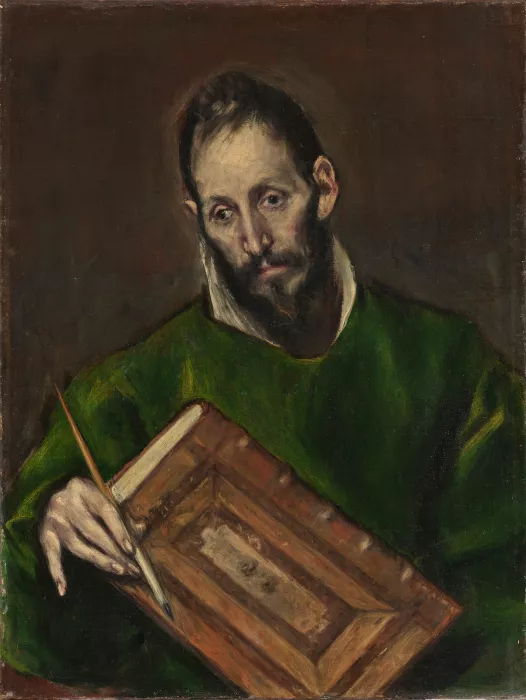
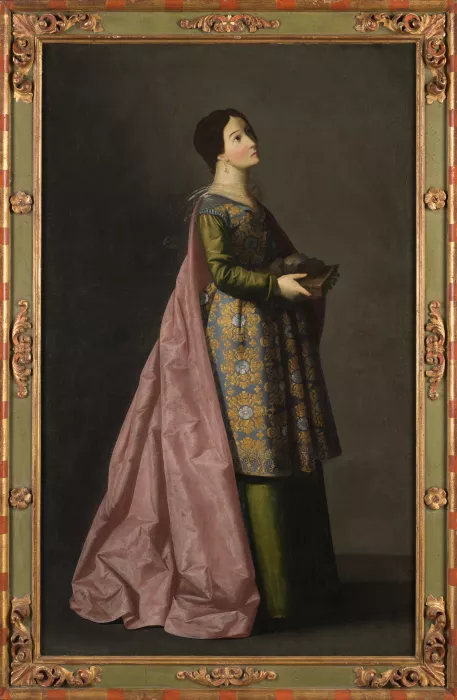
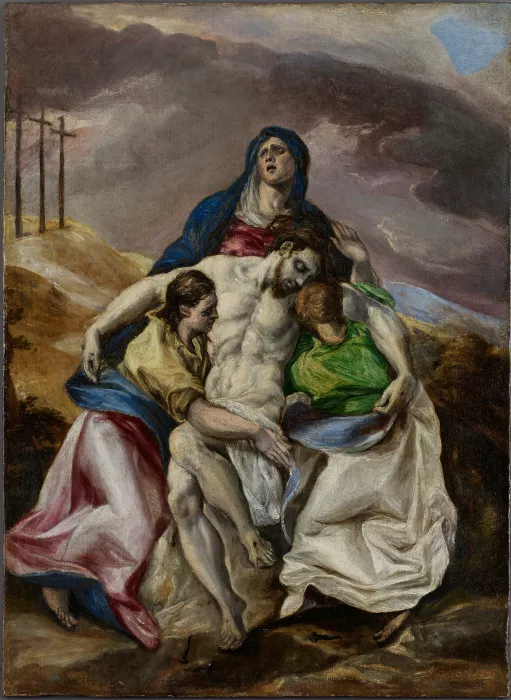
From March 26 to August 2, 2026In spring 2026, the Musée Jacquemart-André, in collaboration with the Hispanic Society of America (New York), will be showcasing Hispanic Baroque art. The exhibition will offer the public the opportunity to admire some forty works from the prestigious American institution, brought together in France for the first time, including paintings by the great masters of the Golden Age such as Velázquez, El Greco, and Zurbarán.
THE SPANISH GOLDEN AGE
Spanning from the early 16th century to the late 17th century, the Golden Age corresponds to the economic, artistic, and literary heyday of the Spanish Habsburg monarchy (1516-1700). With a flourishing colonial empire and political and cultural influence spanning much of Europe and extending to the Americas and Asia (the Philippines), the Kingdom of Spain experienced a period of extraordinary artistic vitality. This period was marked by successive reigns of sovereigns whose royal courts acted as patrons and sponsors of the greatest artists. Between the late Renaissance and the full flowering of the Baroque, Spanish artistic production was distinguished by its expressive intensity, its profound spirituality, and its taste for the exaltation of form.
HISPANIC BAROQUE
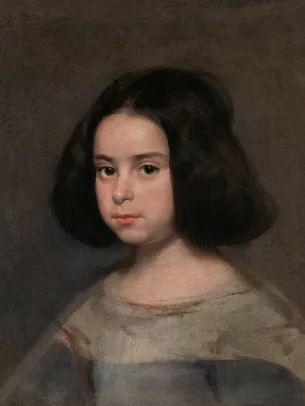
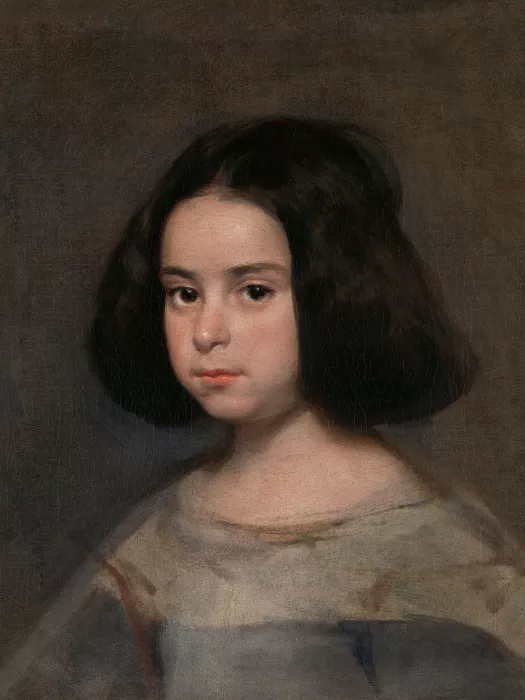
At the crossroads of Italian and Flemish influences, but also nourished by discoveries and exchanges from the newly conquered American territories, Spanish art of the Golden Age is characterized by remarkable aesthetic and thematic richness. This production constitutes one of the most unique chapters in Western art history, although it is proportionally underrepresented in French collections. Artists from all over Europe, such as El Greco (1541-1614) and Antonio Moro (c. 1520-c. 1577), contributed to the renewal of Spanish painting, infusing it with innovation and vitality. Spain thus became fertile ground for the Baroque style to flourish. This term, derived from the Portuguese barroco, originally referred to the shape of an irregular pearl and is characterized in art by abundant, theatrical, and triumphant forms aimed at seducing the senses. Francisco de Zurbarán, Juan Carreño de Miranda, Bartolomé Esteban Murillo, and Matteo Cerezo are among the masters of this period.Spanish painting excelled particularly in the genres of portraiture and religious themes. These religious subjects, imbued with the spirit of the Catholic Counter-Reformation, glorified history, devotion, and sacred dogmas in an expression that was both visually eloquent and intensely spiritual. Spanish portraiture reached its peak with Velázquez, who revitalized old formulas to the point of revolutionizing the genre. His Portrait of a Young Girl (c. 1638-1642), featured in the exhibition, perfectly illustrates this ability to give his models a striking presence. A work by John Singer Sargent provides a counterpoint, testifying to the lasting influence of the man Manet called “the painter's painter.”
THE HISPANIC WORLD BEYOND EUROPE
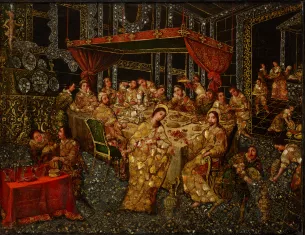
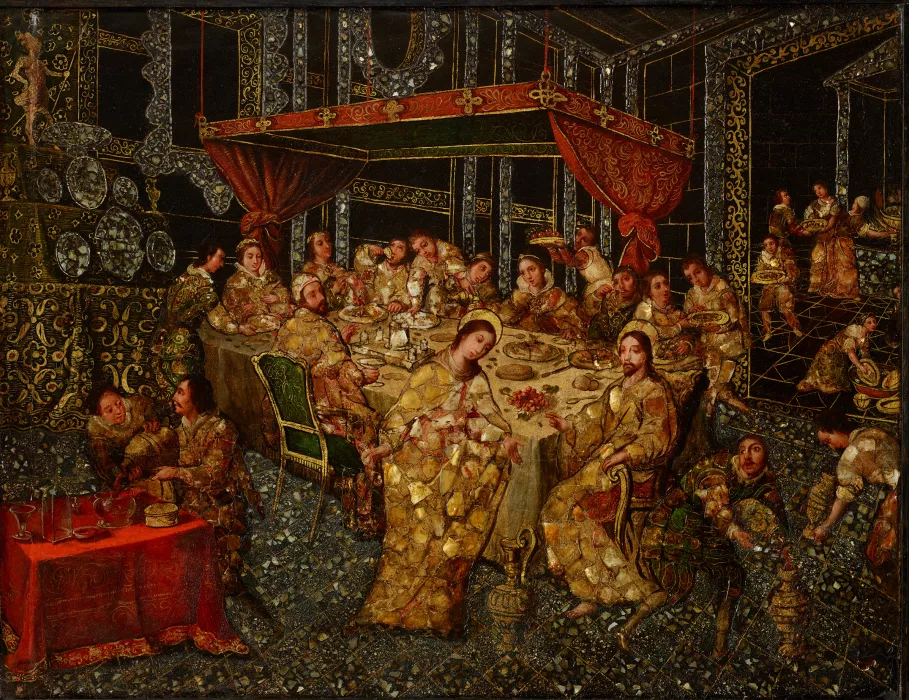
The exhibition also includes major works by 17th- and 18th-century artists who were active in or originated from Latin America. Heirs to the great Spanish pictorial tradition introduced after the conquest of the “New World,” these painters successfully combined Western influences with local techniques and traditions. This fusion gave rise to a unique and remarkable body of work—still very rarely shown in French museums—which the exhibition will offer a valuable presentation of.
With the support of

The team
Curator
Guillaume Kientz is Director and CEO of the Hispanic Society Museum & Library in New York. A graduate in Political Science and the Institut National du Patrimoine, he was previously curator of Spanish, Portuguese, and Latin American paintings at the Louvre Museum (2010-2019) and curator of European art (Middle Ages – 20th century) at the Kimbell Art Museum (2019-2021). A specialist in Spanish painting, he has curated numerous exhibitions, including “Velázquez” (2015) and ‘Greco’ (2019-2020) at the Grand Palais, "Murillo. From Heaven to Earth“ (2021-2022) at the Kimbell Art Museum, and ”Sorolla and the Sea" (2024) at the Norton Museum of Art. Among his publications on Spanish Baroque art, Guillaume Kientz is the author of Velázquez, l'affrontement de la peinture (Velázquez, the confrontation of painting) (2015, Cohen & Cohen) and Le Siècle d'or espagnol (The Spanish Golden Age) (2019, Citadelles & Mazenod).
Pierre Curie is chief curator of the Musée Jacquemart-André. A specialist in 17th-century Italian and Spanish painting, he has also worked with 19th-century French painting at the Musée du Petit Palais, Paris, where he began his career as a curator. He was subsequently put in charge of painting at France’s national General Inventory of Cultural Heritage, and has co-authored and edited “Vocabulaire typologique et technique de la peinture et du dessin” (published in 2009). Appointed head of the painting section of the restoration department at the Centre de Recherche et de Restauration des Musées de France in 2007, he has coordinated and monitored several major restorations of paintings belonging to national museums (Leonardo da Vinci, Titian, Rembrandt, Poussin, etc.). Pierre Curie has been curator of the Musée Jacquemart-André since January 2016 and is co-curator of all its exhibitions.
Production and realization: Culturespaces
Emmanuelle Lussiez, Director of Exhibitions
Milly Passigli, Director of Exhibition Programming
Bernadette Roux, Exhibition Manager
Livia Lérès and Domitille Séchet, for the iconography
Scenography
Hubert le Gall, French sculptor, designer and scenographer