Exhibition
Timeless Tintoretto
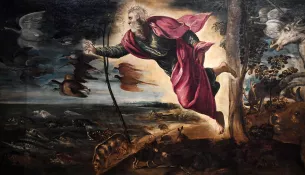
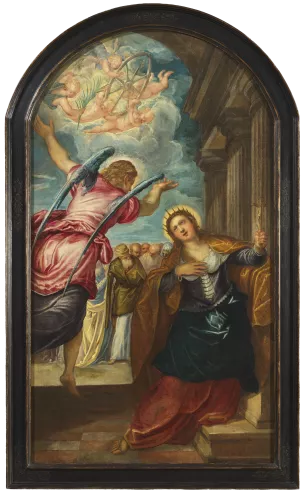
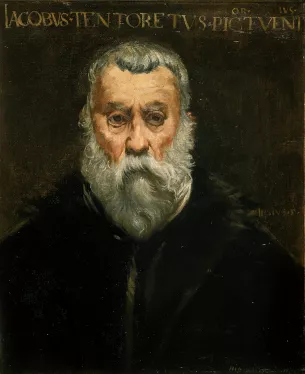
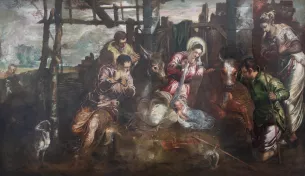
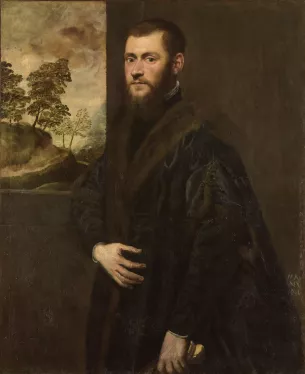
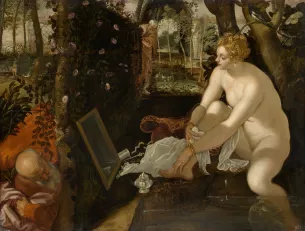
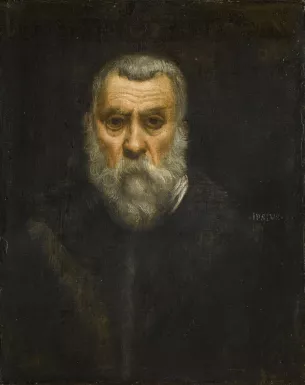
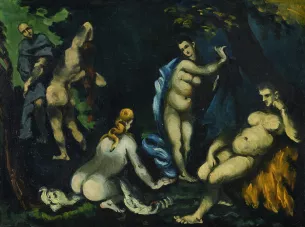
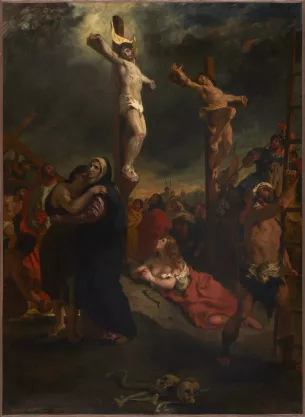
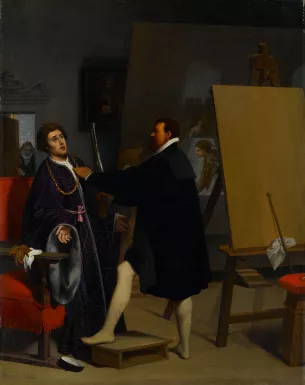
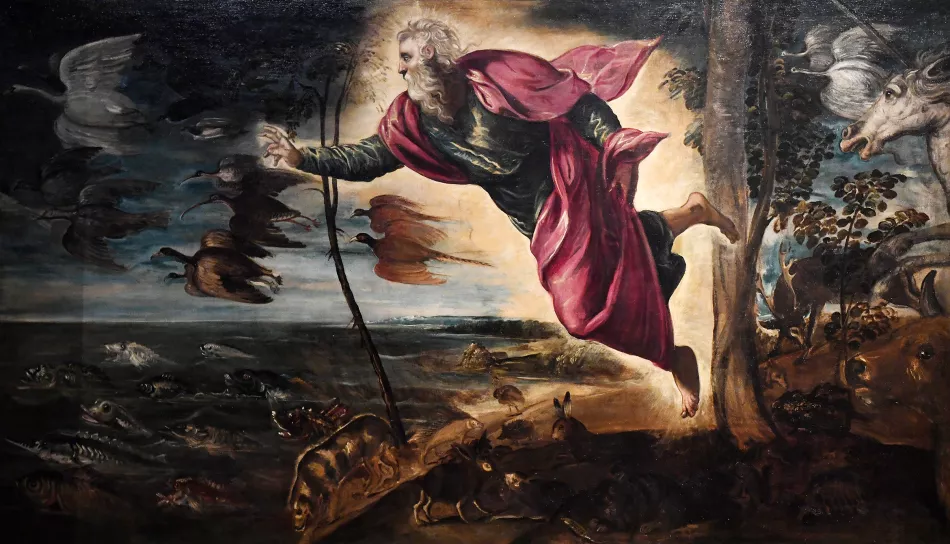
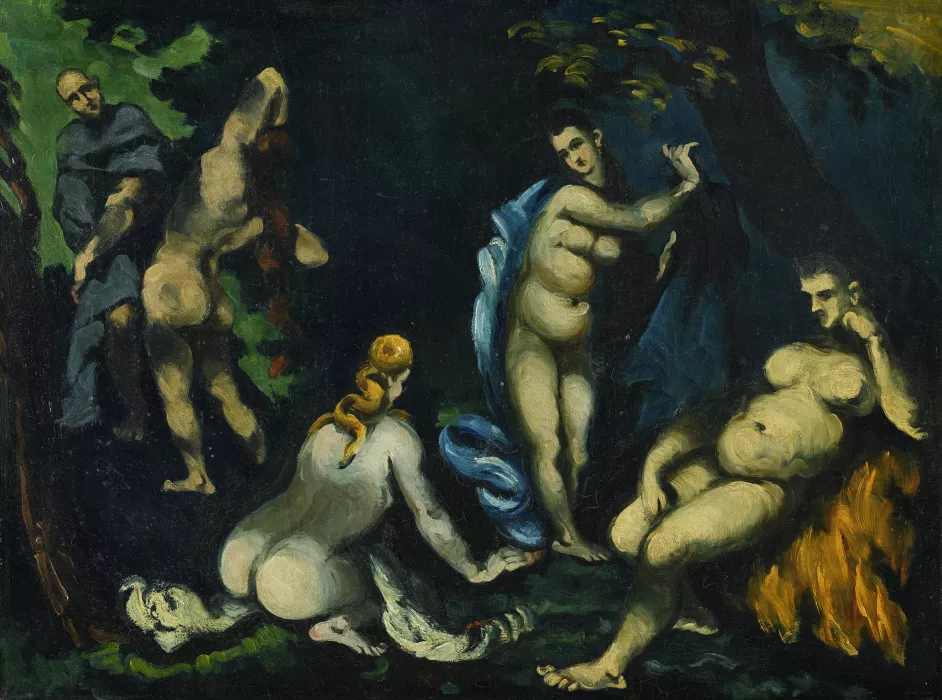
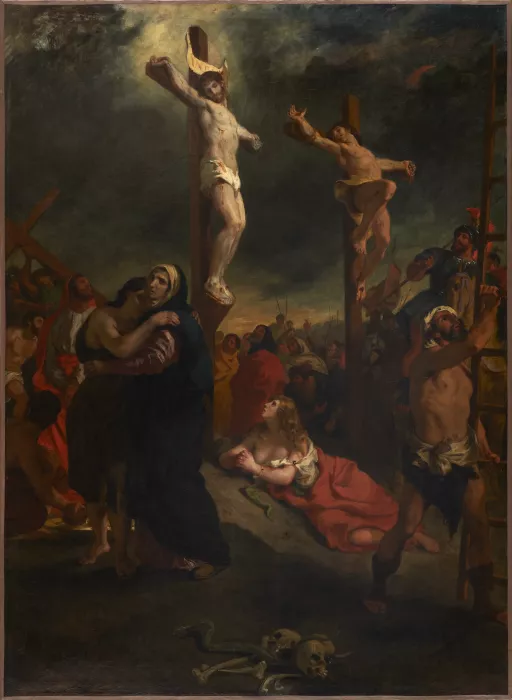
From September 11, 2026, to January 24, 2027From 11 September 2026 to 24 January 2027, the Musée Jacquemart-André is showcasing the work of one of the leading figures of Italian Mannerism, Jacomo Robusti, known as Tintoretto (1518/19–1594). This exhibition presents, for the first time in France, a comprehensive overview of Tintoretto’s entire career and demonstrates how his artistic legacy has transcended temporal and geographic boundaries, establishing him as a key influence on 19th-century French painting.
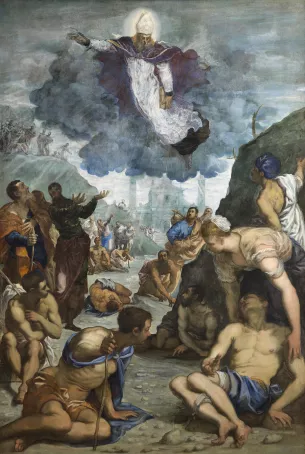
Jacomo Robusti, nicknamed ‘Tintoretto’ in reference to his father’s trade as a dyer, established himself as a major figure in 16th-century painting. In Venice, where he remained for all his life, his ambition found fertile ground. It was in this capital of culture that his remarkably long career unfolded. Although little is known about his training, he began making a name for himself in the late 1540s with prestigious commissions such as Miracle of the Slave (1548). During the second half of the century, at the head of a large workshop, he dominated the market for large-scale decorative cycles commissioned for civic buildings, including the Doge’s Palace (the Paradise fresco, from 1588) and the Scuola Grande di San Rocco (1564–1588).
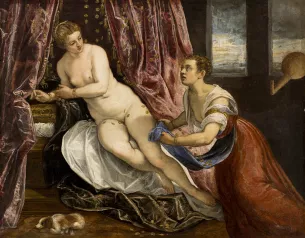
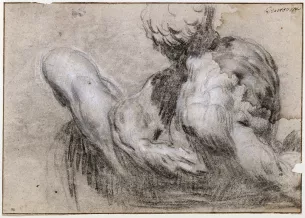
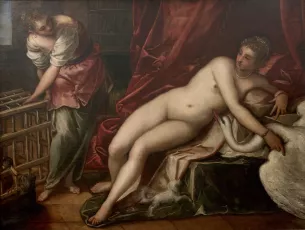
Emphasising the modernity of his art, the exhibition reveals the singularity of an artist endowed with the most incredible creative energy, and described by Vasari as ‘the most formidable mind that painting has ever known’ (1568). A complex artist who defies categorisation, Tintoretto produced a body of work that is admired and controversial in equal measure, characterised by bold compositions, dizzying perspectives, spectacular lighting effects and rapid, bold brushstrokes – the famous prestezza. Combining the sculptural drawing (disegno) of the Tuscan masters — particularly that of Michelangelo, who fascinated him — and the Venetian colorito of Titian, his rival, he brought the Renaissance in Venice to its zenith.
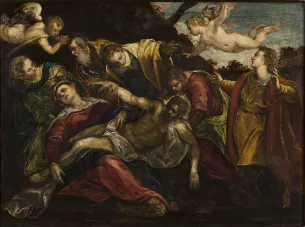
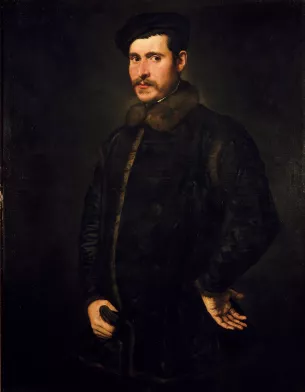
Bringing together some forty paintings and graphic works from public and private collections in France, Italy and elsewhere, the exhibition allows visitors to appreciate the diversity and scope of Tintoretto’s oeuvre through a number of key themes. Major religious works, such as The Miracle of St Augustine (1547–1549, Palazzo Chiericati, Vicenza) and The Trinity (c. 1561–1562, Galleria Sabauda, Turin), demonstrate, for example, his ability to breathe new life into sacred subjects through dramatic interpretation.
Under the patronage of
With the support of

The team
Curators
Giovanni Carlo Federico Villa is director of the Palazzo Madama in Turin and president of the Ateneo di Scienze, Lettere e Arti di Bergamo. He is also a lecturer in modern art history at the University of Bergamo. For the Scuderie del Quirinale in Rome, he curated the ‘Antonello da Messina’ (2006), ‘Giovanni Bellini’ (2008), ‘Lorenzo Lotto’ (2011), ‘Tintoretto’ (2012) and ‘Titian’ (2013) exhibitions. He has also curated numerous exhibitions in Italy and abroad, including in Paris, Brussels, Guangzhou, Moscow, Saint Petersburg, Riga, Suzhou, Tokyo, Yerevan, Zadar and Zagreb. His ‘Europa’ exhibition, which explores the founding values of the peoples of Europe, has been shown in 44 countries across five continents. He is the author of over three hundred scientific publications and authoritative monographs.
Neville Rowley is curator of 14th and 15th century Italian paintings at the Gemäldegalerie in Berlin. He teaches at the École du Louvre and at the Technical University of Berlin. He has curated a number of exhibitions at the Gemäldegalerie and the Bode Museum in Berlin, the Villa Medici and the Musée Jacquemart-André, including ‘Giovanni Bellini. Influences croisées’ in 2023. He has published numerous books and articles on art of the Italian Renaissance.
Pierre Curie is a general heritage curator. Specialising in 17th-century Italian and Spanish painting, he has also worked on 19th-century French painting at the Petit Palais museum, where he began his career as a curator. Subsequently, as head of the painting department at the Inventaire général, he co-authored and edited the 'Vocabulaire typologique et technique de la peinture et du dessin' (published in 2009). Appointed head of the painting section of the restoration department at the Centre de recherche et de restauration des Musées de France in 2007, he coordinated and supervised several major restorations of paintings in national museums (Leonardo da Vinci, Titian, Rembrandt, Poussin, etc.). Pierre Curie has been curator of the Jacquemart-André Museum since January 2016 and, as such, co-curator of all its exhibitions.
Production and realisation
Emmanuelle Lussiez, Director of Exhibitions
Milly Passigli, Director of Exhibition Programming
Bernadette Roux, Exhibitions Manager Livia Lérès,
Domitille Séchet and Mathilde Seys for the iconography
Scenography
Hubert le Gall, French sculptor, designer and scenographer